
Emancipation Day: Remembering the past, shaping the future
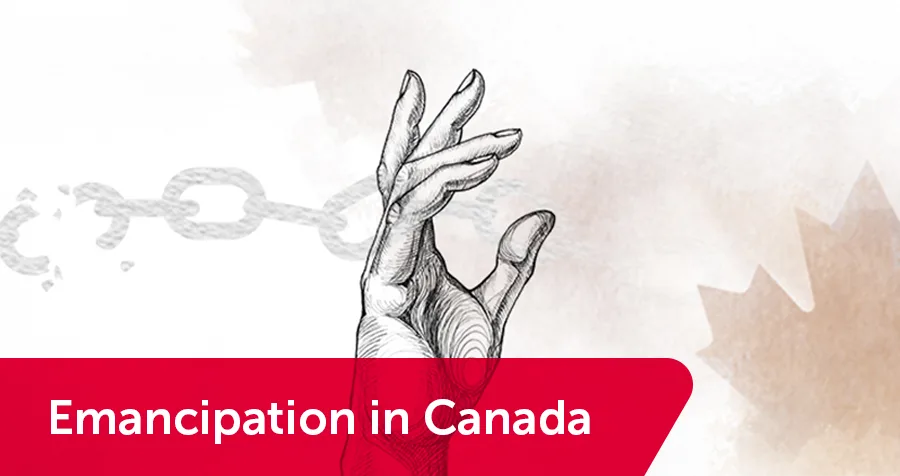
Source image courtesy of Canadian Heritage
"One could say it was an institution that was abolished 200 years ago but let me tell you this; there is no institution in modernity, in the last 500 years or so, that has changed the world as profoundly as the Transatlantic Slave Trade and slavery." —Sir Hilary Beckles, Historian
Disclaimer: This blog post contains mentions of enslavement, the Middle Passage, struggles for emancipation, themes of loss, and other upsetting topics, which may be difficult to read. If you or someone you know needs support, these resources are available.
Why we recognize Emancipation Day
On August 1, 1834, the Slavery Abolition Act came into effect across the British Empire, legally ending the enslavement of Black and Indigenous Peoples in what is currently called Canada.
Today, we recognize August 1 as Emancipation Day — a time to remember one of history's greatest injustices, honour the resilience of those who resisted enslavement, and reflect on how the legacy of the Transatlantic Slave Trade continues to shape our communities today.
To understand why Emancipation Day matters, it's important to understand the history behind it.
The Transatlantic Slave Trade and the Middle Passage
Europeans established a coastal slave trade in the 15th century. The slave trade to the Americas began in the 16th century and lasted through the 19th century. Millions were kidnapped and taken from Africa to South America (mainly Brazil), the Caribbean, and North America. Research indicates that at least 12 million Africans were forcibly transported across the Atlantic and treated as human property. Of those, nearly two million did not survive the Middle Passage. Millions more died prior to embarkation during slave raids and forced marches to the coast.
The Middle Passage was the forced, brutal voyage from Africa, across the Atlantic Ocean, to the Americas that typically lasted around 80 days. From small sailing vessels to huge purpose-built slave ships, conditions were brutal, and people were often stripped, branded, and chained together with no space to sit upright or move around. These horrific and inhumane conditions led to widespread illness, and an estimated 15% of the kidnapped African men, women, and children aboard these ships died.
People resisted captivity in many ways, including mutinies, hunger strikes, and, for some, choosing to end their own lives rather than face enslavement.
The road to freedom
The Slavery Abolition Act was passed in 1833 and came into effect on August 1, 1834, across the British Empire. It marked an important step toward ending the legal enslavement of more than 800,000 Africans and their descendants across the Caribbean, Africa, South America, and what is currently called Canada. It also made Canada a destination for thousands of African Americans seeking freedom, many of whom arrived between 1834 and the early 1860s.
However, freedom was not immediate or equal for everyone. Children aged six and younger were freed immediately, while many older children and adults remained enslaved. Others were forced to continue serving their former owners as “apprentices” for up to six more years.
Commemorations
The Canadian government declared August 1 as Emancipation Day in 2021. That same year, the province of Ontario proclaimed August to be Emancipation Month. Cities across the Greater Toronto Area (GTA) have their own recognitions of this important time. Today, Emancipation Day is a time to honour resistance, resilience, and freedom from enslavement.
The gravest crime against humanity
In March 2026, Ghana led a campaign at the United Nations (UN) to declare the Transatlantic Slave Trade "the gravest crime against humanity". The resolution was introduced to support healing, ensure this history is not forgotten, and acknowledge that the consequences of slavery continues today.
The resolution received overwhelming support. Three countries voted against it, while 52 countries, including Canada, abstained.
The resolution marks the strongest recognition the UN has ever given to the Transatlantic Slave Trade, giving it significant political importance. It emphasizes that the trade was far more than forced labour. As UN Secretary-General Antonio Guterres said, it involved "barbaric punishments that maintained control — from shackles and iron collars to flogging and sexual violence. It was not simply forced labour."
"It was a machinery of mass exploitation and deliberate dehumanization of men, women, and children. The wounds run deep and often go unrecognized." —UN Secretary-General Antonio Guterres
Although the resolution is not legally binding, it is more than symbolic. In international law, recognition can help shape legal norms and influence future responsibilities. By recognizing the Transatlantic Slave Trade as the gravest crime against humanity, the UN has elevated its place within international human rights and criminal law.
The resolution has also renewed conversations about reparative justice. For many years, groups such as the Caribbean Community (CARICOM) Reparations Commission have advocated for a ten-point plan that begins with a formal apology and reparations.
As we recognize the UN’s resolution, we remain hopeful that meaningful reconciliation will continue to grow through both words and actions.
"There can be no peace without justice — reparatory justice — and that call is answered only when words are turned into action. The question is, what will you do?" —Esther Phillips, Poet Laureate of Barbados
At the YMCA of Greater Toronto, we're committed to diversity, equity, inclusion, and belonging. That means more than acknowledging history. It means listening, learning, and confronting anti-Black racism with the awareness that its effects exist in our communities today.
Frequently asked questions
Where can I learn more about the people and routes of the Transatlantic Slave Trade?
SlaveVoyages lets you search historical records by person, ship, place, or route. It documents the forced transport of more than 12 million African people across the Atlantic and within the Americas.
How can I talk to my children about Emancipation Day?
CBC Kids offers resources to help families learn about Emancipation Day and the history of slavery in ways that are appropriate for children and youth.
Where can I learn more about the UN resolution?
This article explains the UN resolution, its significance, and what it could mean for future reconciliation efforts.
Is there a permanent memorial to the Transatlantic Slave Trade in North America?
The Arc of Return, located at the United Nations Headquarters in New York City, is a permanent memorial to the victims of slavery and the Transatlantic Slave Trade. This five-minute video explains the memorial and the symbolism behind its design.
This blog post is dedicated to the memory of Medhat Mahdy, former President and Chief Executive Officer of the YMCA of Greater Toronto.
As the executive sponsor of the YMCA of Greater Toronto’s Black Experience Staff Advisory Committee (BESAC), Medhat helped create spaces for meaningful dialogue, accountability, and lasting change. His support and advocacy continue to shape our work and values. We honour his legacy of leadership, compassion, and unwavering commitment to equity and inclusion and are deeply grateful for his vision, his encouragement, and the integrity with which he led.
We remember him with gratitude, respect, and peace. Fi Amaanillah (في أمان الله)
Ila al-liqaa إلى اللقاء) , ya Medhat) .