
Children’s books spotted at the Y: Reading ideas for every age and interest
Reading time: 6 minutes
Looking for books to inspire your child’s next read?
Start with what catches their interest.
A young child might point to a favourite picture, repeat a familiar sound, or ask questions about a story. An older child might choose a novel, comic, fact book, or how-to guide.
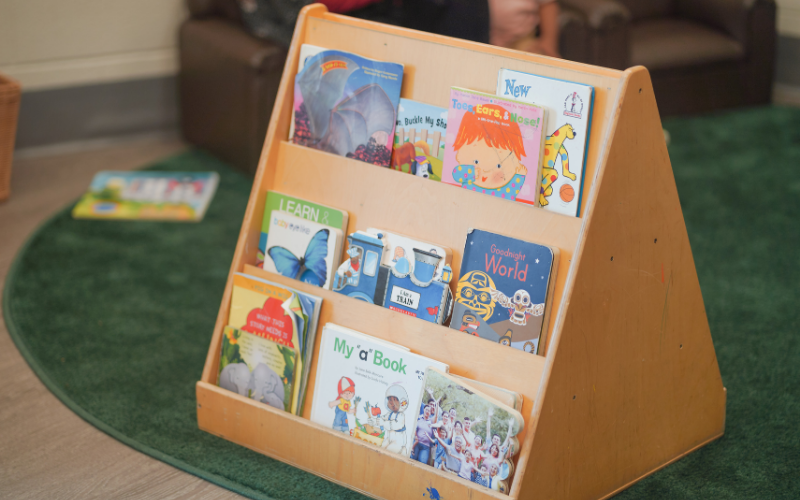
We explored YMCA of Greater Toronto child care and Before & After School spaces to see what children were reading. We found books about animals, feelings, food, seasons, science, crafts, and more.
Here are some that caught our attention.
Recommended ages are a general guide based on available information. Children may enjoy books above or below these age ranges.
Books to explore together
With young children, reading can be wonderfully simple.
Turn a page. Point to a picture. Name something. Make an animal sound.
And if your child wants the same story again, turn back to page 1.
Everywhere Babies by Susan Meyers
Recommended for ages 0 to 2
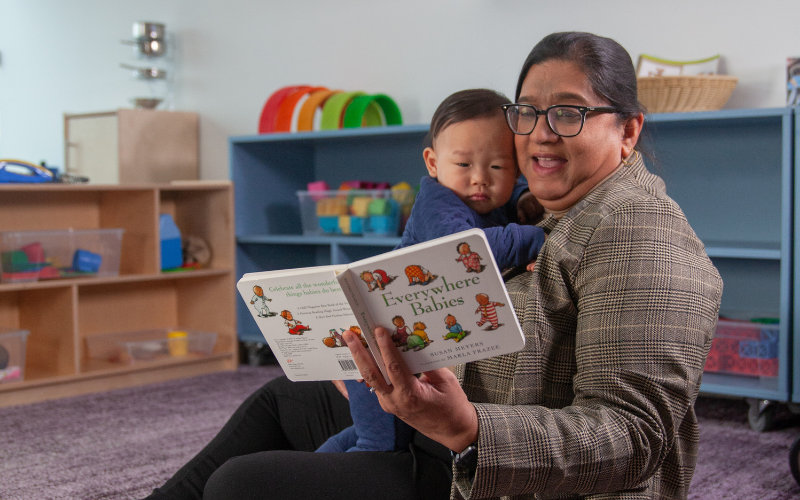
Young children eat, sleep, crawl, play, and spend time with the people who care for them.
Invites children to recognize familiar people, routines, and moments from their own lives.
Counting Kisses by Karen Katz
Recommended for ages 1 to 5
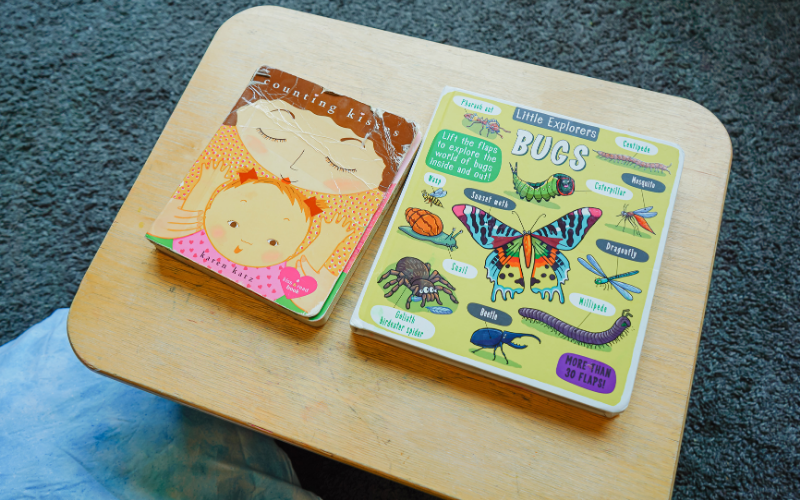
Counting becomes part of a warm, familiar family moment.
Introduces numbers through affection, body parts, and everyday routines.
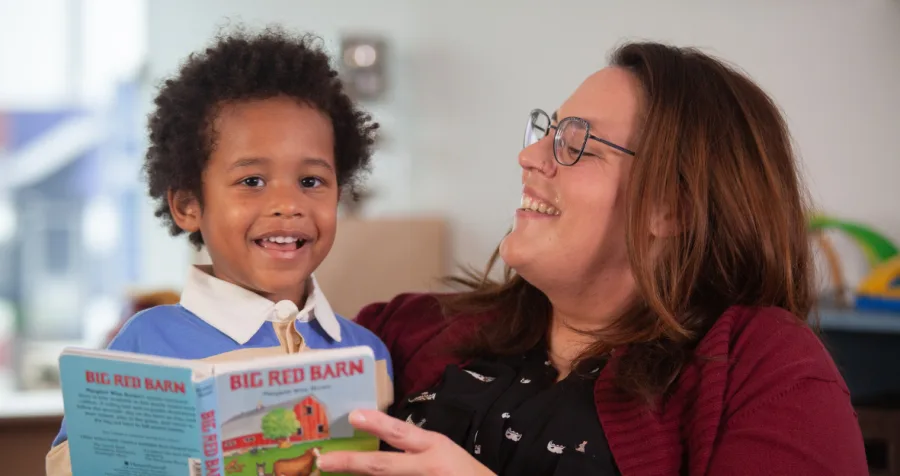
Big Red Barn by Margaret Wise Brown
Recommended for ages 0 to 4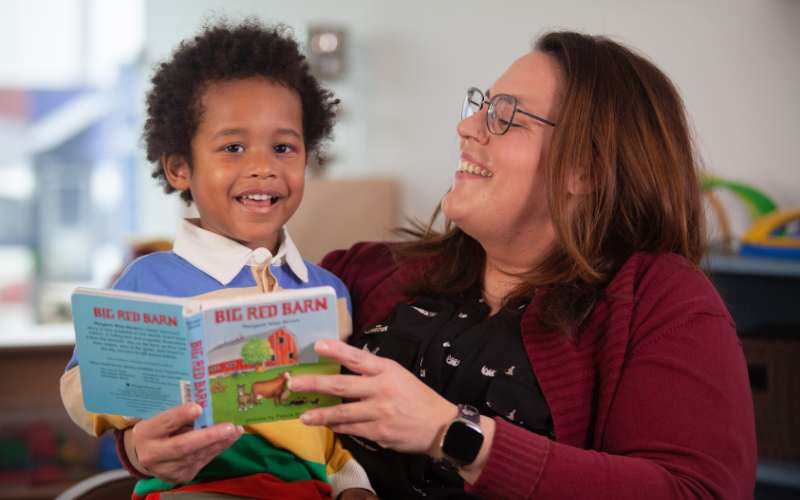
A barn full of animals gives children plenty to see, name, and hear.
Encourages children to notice rhyme, sounds, and new words.
Look, find, and discover
Sometimes the fun is in finding something on the page.
Where is it?
What do you notice?
Can you find another one?
Spot It! A Hide and Seek Book by Eric Hall
Recommended for ages 1 to 3 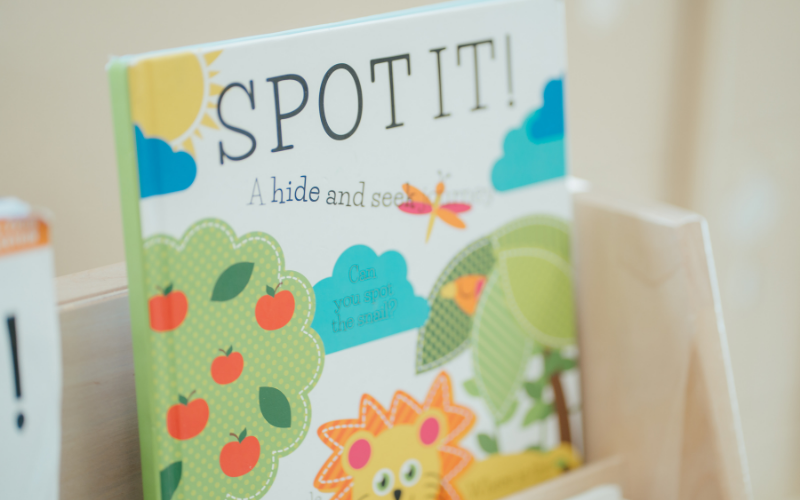 Children search the pages for hidden objects, giving them a reason to slow down and take a closer look.
Encourages focus, matching, and talking about what children notice.
Follow what interests them
Children can become fascinated by one thing.
Bugs. Trucks. Dinosaurs. Food.
Books can offer another way to explore those interests.
In some YMCA spaces, we spotted books alongside other materials and activities. A book about insects, for example, can help children learn more when their questions turn to bugs.
This interest-led exploration connects with YMCA Playing to Learn™ and YMCA A Place to Connect™, the curricula that guide our child care and Before & After School programs.
ABC Bug Book for Kids by Jessica Lee Anderson
Recommended for ages 1 to 3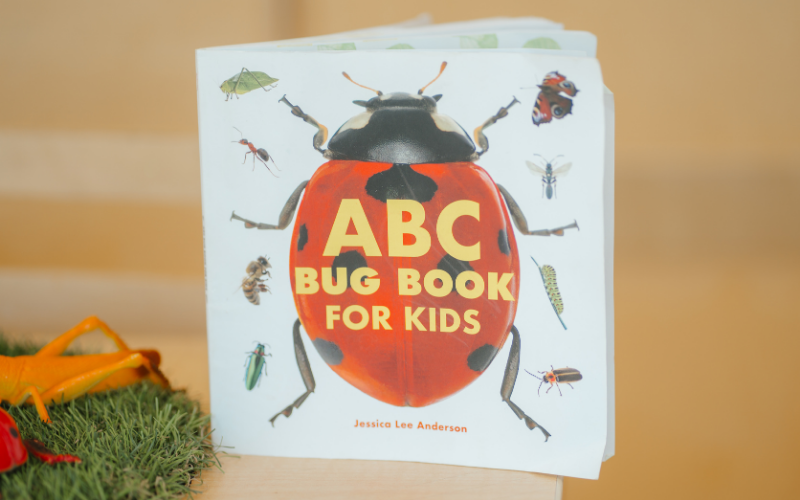
A child who already notices bugs may have plenty of questions. What is that? Does it fly? Where does it live?
Builds on an interest in insects while introducing nature, letters, and new words.
Trucks by Roger Priddy
Recommended for ages 0 to 3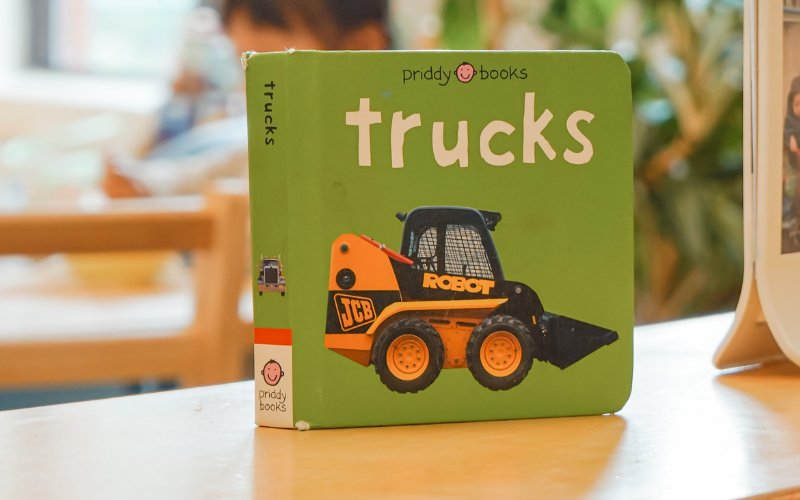
For a child who loves trucks, recognizing one on a page can be reason enough to open the book.
Invites children to explore vehicles, sounds, colours, and familiar things they see around them.
India on a Plate! Indian Food from A to Z by Archana Sreenivasan
Recommended for ages 1 to 3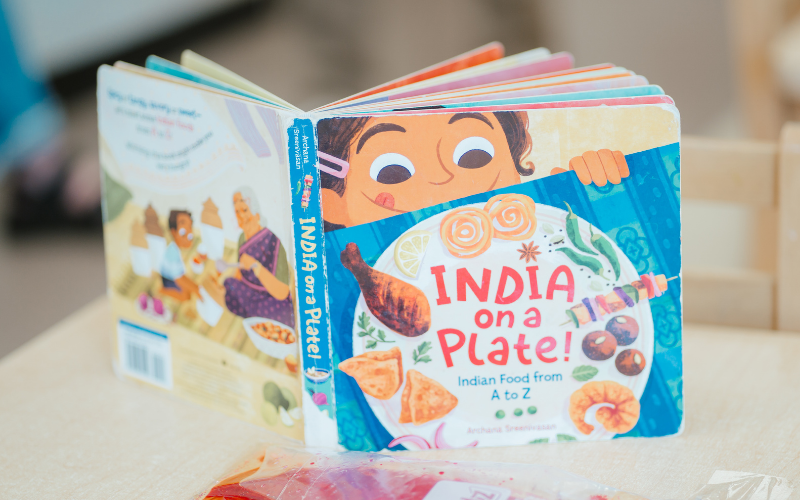 This alphabet book introduces Indian cuisine from A to Z, giving children a chance to discover familiar and new foods and words.
Creates opportunities to explore language, and culture, and talk about foods children might recognize from home.
Dino Chores by Little Hippo Books
Recommended for ages 1 to 3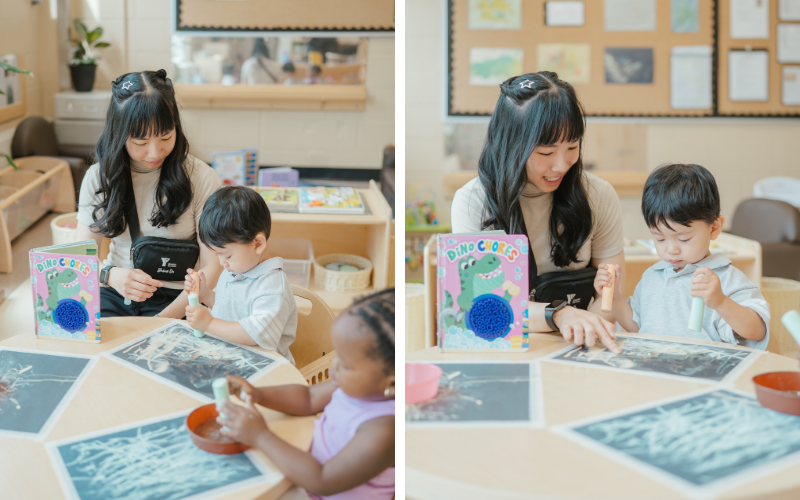 Dinosaurs take on everyday chores in a playful combination of something familiar and something prehistoric.
Connects an interest in dinosaurs with everyday routines and imaginative thinking.
Stories about feelings and being yourself
Stories can give families an easy starting point for talking about feelings and identity.
A character might feel grumpy. Another might be learning what makes them special.
Seeing those experiences in a story can help start a conversation.
The Pout-Pout Fish by Deborah Diesen
Recommended for ages 1 to 3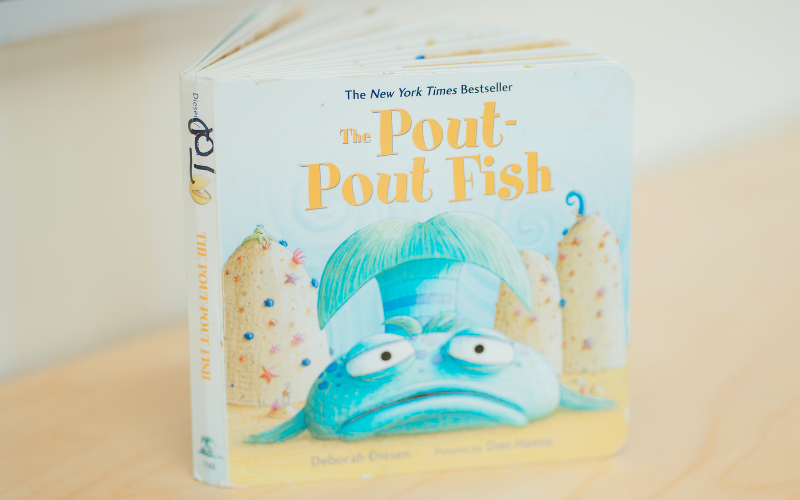 A gloomy fish moves through his underwater world in a story filled with rhyme and repeated language.
Creates opportunities to talk about feelings while enjoying rhyme, repetition, and humour.
Lili Macaroni by Nicole Testa
Recommended for ages 4 to 7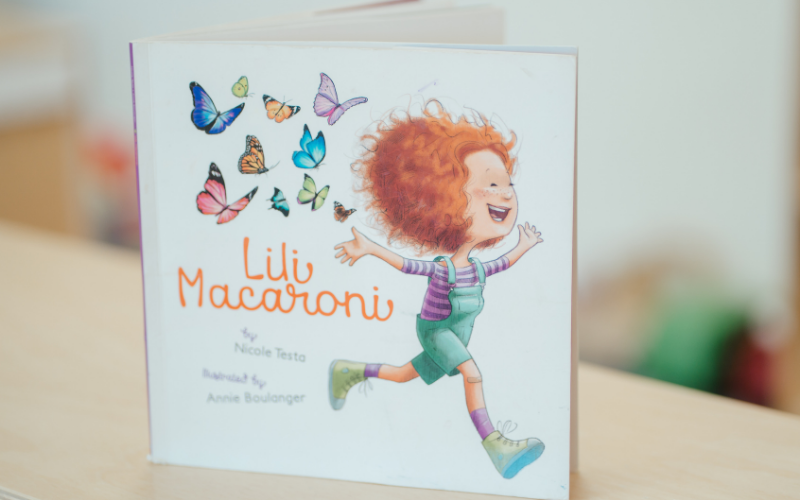 Lili celebrates the things that make her who she is.
Encourages conversations about identity, feelings, and what makes each person unique.
Read with the seasons
Sometimes a book feels especially fun when the world outside starts to look like its pages.
Changing leaves, cooler weather, and seasonal traditions can give children something familiar to recognize in a story.
Let It Fall by Maryann Cocca-Leffler
Recommended for ages 3 to 5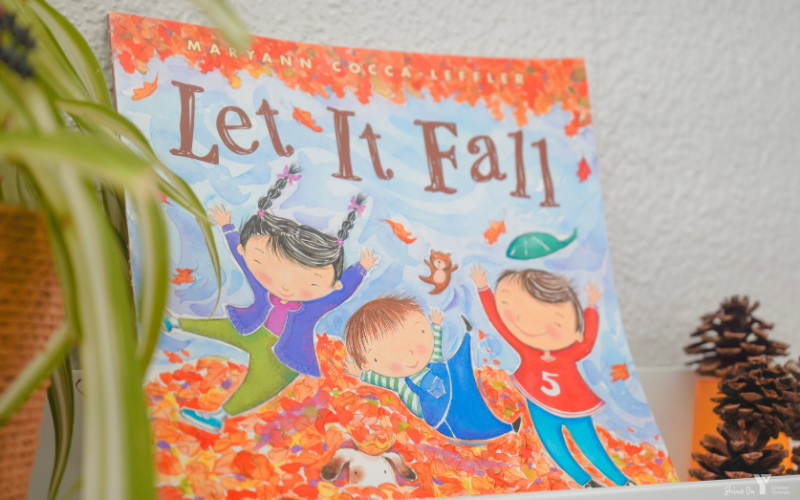 Leaves change colour, the air gets cooler, and a family enjoys the sights and activities of fall.
Encourages children to notice changes in the weather and the world around them.
There Was an Old Lady Who Swallowed a Bat! by Lucille Colandro
Recommended for ages 4 to 8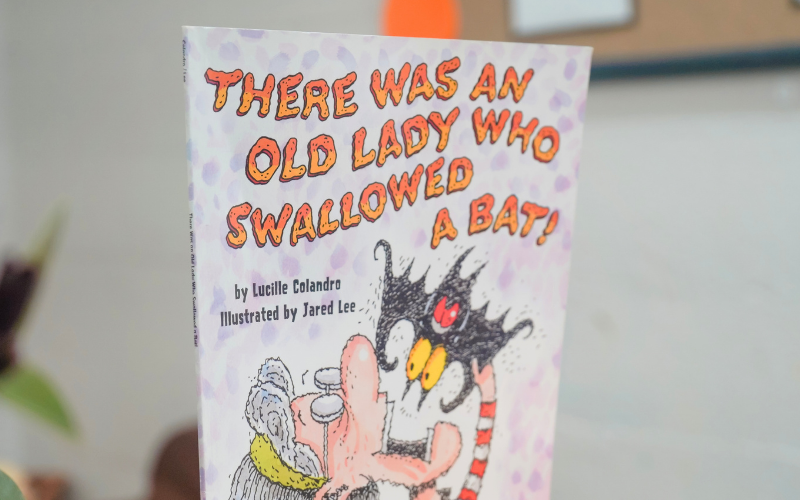
A silly story builds through a repeating pattern as the old lady swallows one surprising thing after another.
Invites children to enjoy rhyme and repetition while predicting what might happen next.
Read it, make it, try it
Sometimes a book inspires children to do more than read.
A story might lead to singing, dancing, making something, or trying a new activity.
The Log Driver’s Waltz by Wade Hemsworth, illustrated by Jennifer Phelan
Recommended for ages 4+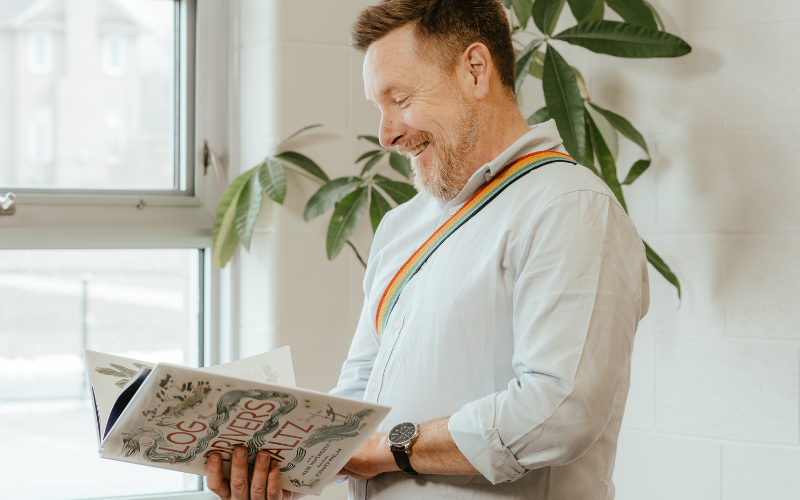
This picture book brings Wade Hemsworth’s Canadian folk song to the page.
Connects storytelling with music, words, and movement.
When children choose their own reads
As children grow, their book choices may change, too.
Some still love picture books. Some reach for novels. Others prefer comics, jokes, facts, mysteries, or instructions.
There is room for different interests and different ways of reading.
Popcorn by Rob Harrell
Recommended for ages 9 to 12
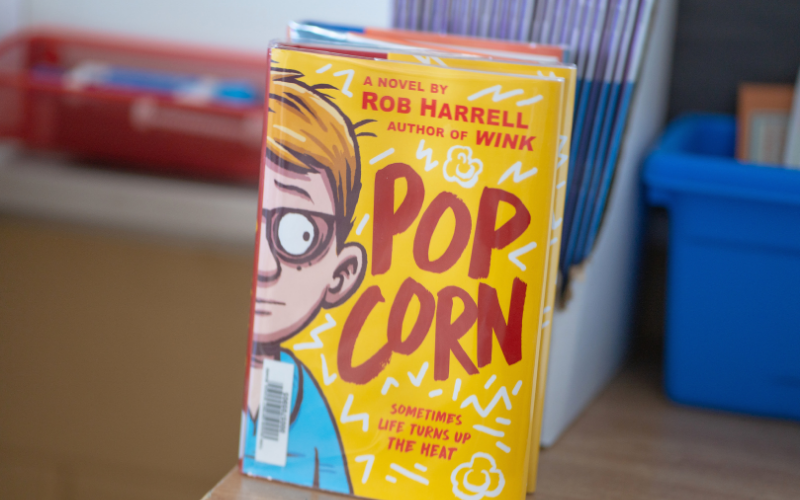
A funny story about a student navigating a challenging day at school.
Explores friendship, emotions, and the ups and downs of growing up through humour.
What should your child read next?
Start with what interests them.
Maybe it’s trucks.
Maybe it’s bugs.
Maybe it’s a picture book you’ve already read 12 times.
Maybe it’s a funny novel, a book about food, or instructions for making something.
You don’t need to quiz your child when the book ends.
Talk about a picture. Wonder about something together. Follow a question if your child has one.
Or simply enjoy the book.
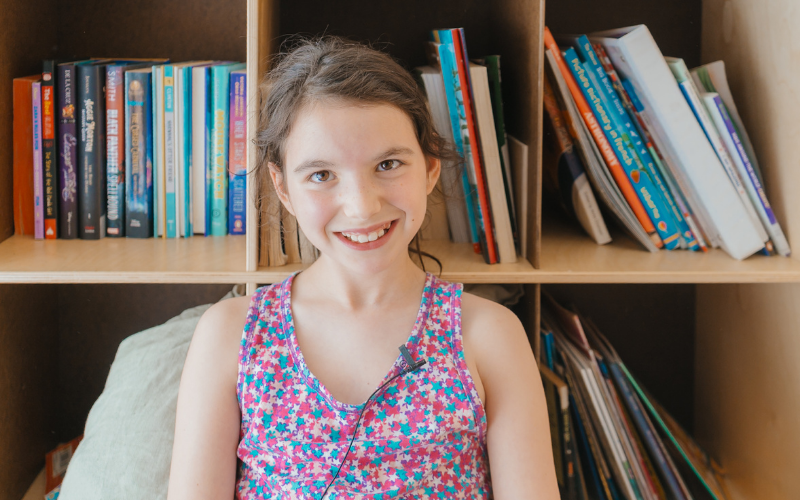
These books were spotted in different YMCA of Greater Toronto child care and Before & After School spaces across the Greater Toronto Area. Books, materials, activities, and experiences vary by location.
Maybe the best place to start is with one question:
What do you want to read next?