
6 cardboard projects for children that build creativity, focus, and connection
Reading time: 4 minutes
Cardboard projects for children do more than keep little hands busy.
They help children practise focus, problem-solving, patience, and confidence. Best of all, you don’t need special supplies, a big plan, or a picture-perfect craft table. A clean cardboard box, tape, markers, and one simple question are all you need to begin:
"What could this become?”
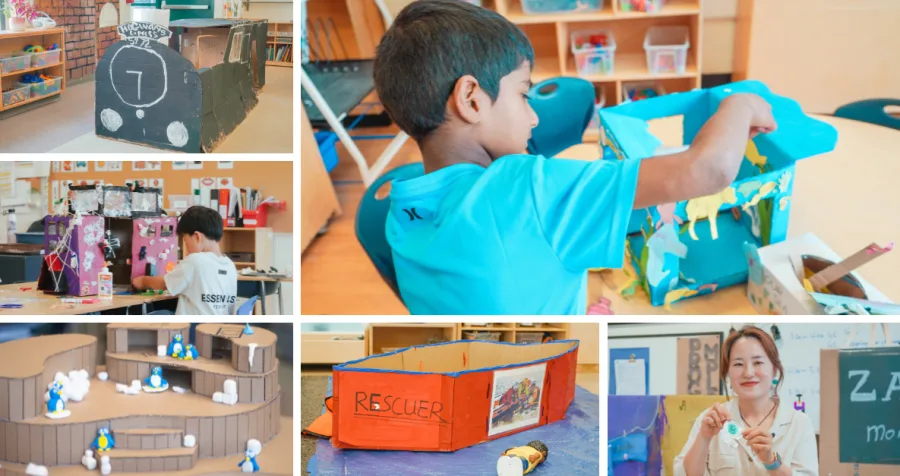
At YMCA of Greater Toronto Before & After School programs, we see children turn cardboard into shops, trains, games, habitats, mailboxes, and pretend worlds. Along the way, they share ideas, choose roles, solve problems, and learn through play with support from child care educators.
YMCA child care educators shared that many projects begin with children’s conversations, interests, or recent experiences. One box becomes a way for children to express what they’re thinking about.
Jump to a cardboard project
Choose one idea to try today:
- Pretend shop
- Essential worker station
- Story train
- Animal habitat
- Snowball toss game
- Mailbox or cardboard car
Quick start: How to begin
- Find a clean cardboard box.
- Gather tape, markers, paper, and child-safe scissors.
- Ask, “What could this become?”
- Let your child lead.
- Help only when needed.
Before you begin, look around your home for delivery boxes, shoeboxes, cereal boxes, paper towel rolls, scrap paper, tape, markers, crayons, playdough, stickers, or clay.
Remember that the project doesn’t need to look perfect. In fact, it probably won’t. That's part of the fun. The learning happens while your child plans, builds, changes ideas, and tries again.
What parents should know
Cardboard projects for children are easy to start, low-cost, and flexible. They can take 20 minutes or grow over a few days. You can also pause when dinner, laundry, or life calls.
This type of play may look simple, but children are learning a lot while doing it.
They may be learning to:
- share ideas
- wait for a turn
- solve small problems
- use their hands
- make choices
- keep going when something falls apart
- feel proud when their idea comes to life

6 cardboard projects for children to try
1. Pretend shop
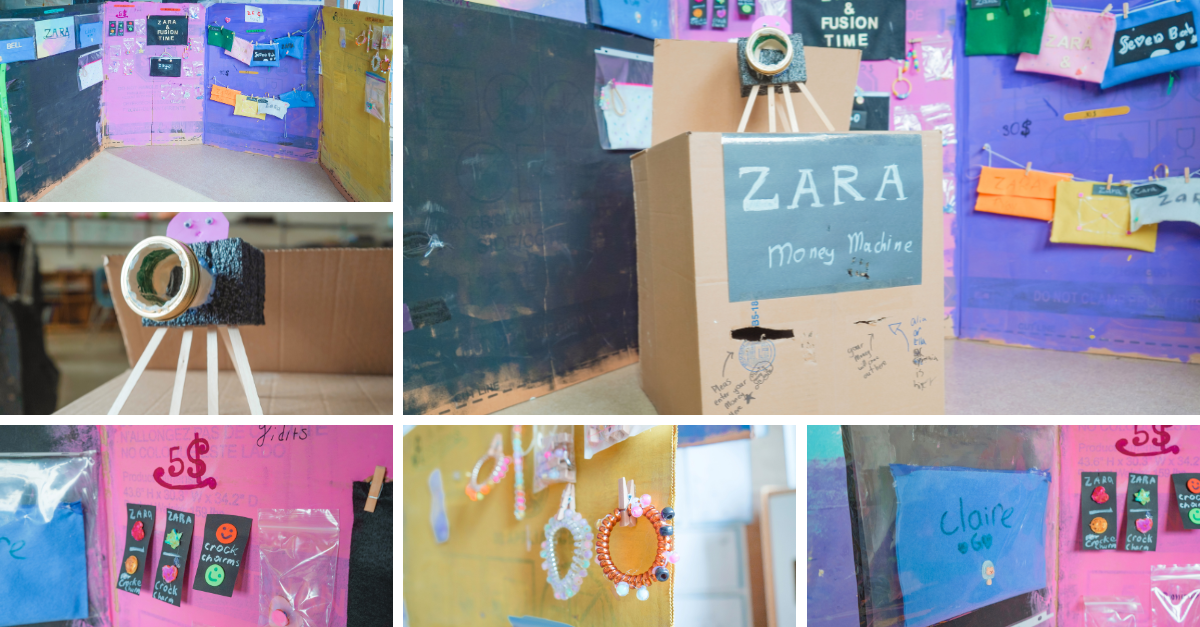
Jenny, a YMCA child care educator, noticed children making accessories like bags, Crocs charms, hairbands, and bracelets. The project grew into a pretend store with handmade items, a money machine, display boards, and roles like cashier, manager, and customer.
Try it at home:
Use one box as a counter. Add a sign, a price list, paper money, and a few items to sell.
Children practise:
Counting, sorting, writing, turn-taking, communication, and organizing.
Make it easier:
Start with one sign and three items to sell. Your living room does not need to turn into a full shopping mall by 4 pm.
2. Essential worker station
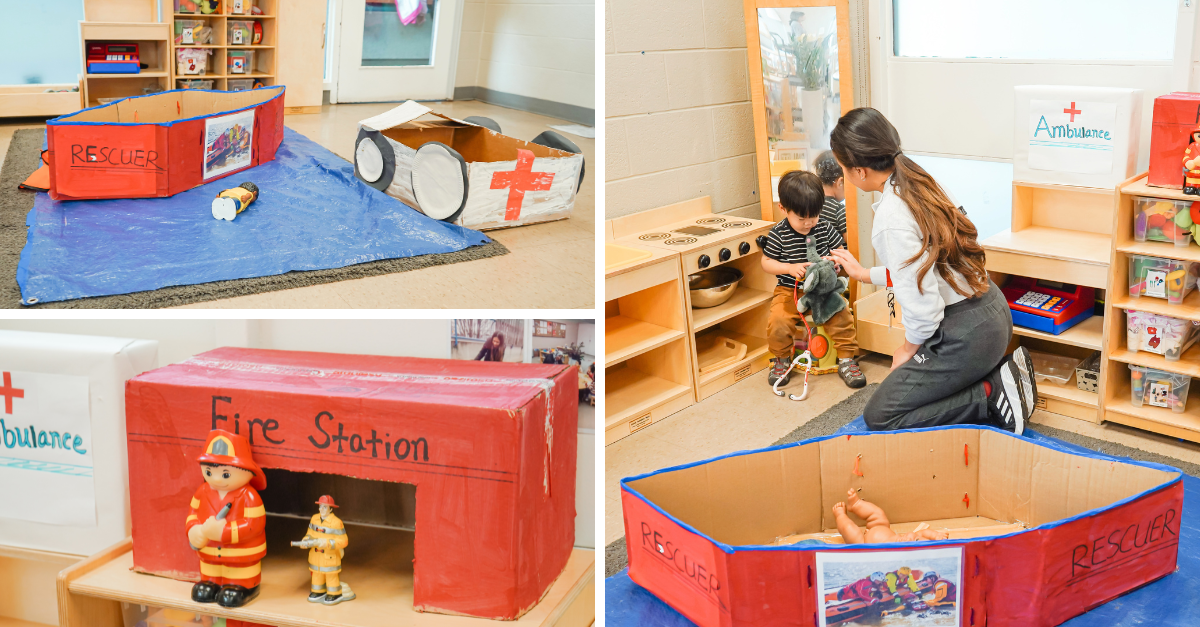
In some YMCA Before & After School programs, children have built fire stations, ambulances, and rescue boats. These projects help children explore helping, safety, and community roles through play.
Try it at home:
Choose one helper theme, like firefighters, paramedics, crossing guards, or rescue workers. Use a box for a station, vehicle, or boat. Add windows, wheels, signs, tools, or a steering wheel.
Children practise:
Empathy, storytelling, planning, teamwork, problem-solving, and communication.
Make it easier:
Ask, “Who needs help?” or “What tools do the helpers need?” A paper towel roll makes a great hose, telescope, or very official-looking tool.
3. Story train
Jenny also shared that a group of children became interested in the Harry Potter books. They wrote a 10–15-page script, created props, and built a large train from two furniture store boxes.
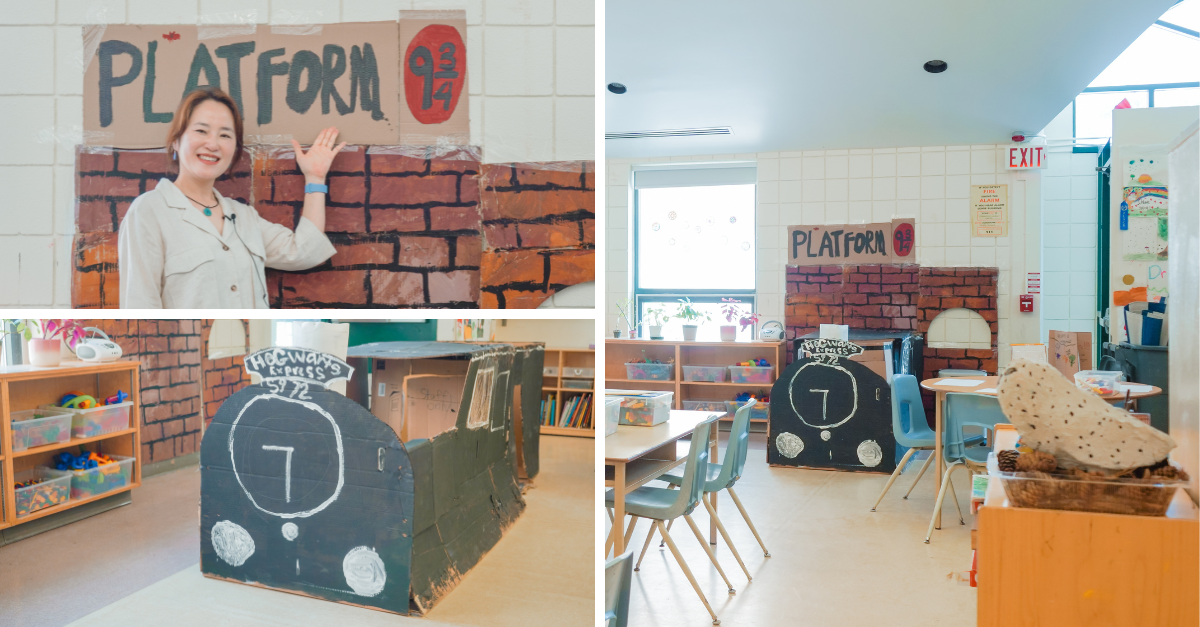
Try it at home:
Use one large box, or a few smaller boxes, to make a train. Add windows, tickets, maps, and a destination sign.
Children practise:
Storytelling, reading, writing, planning, patience, confidence, and teamwork.
Make it easier:
Ask your child where the train is going, then make one ticket and one sign. Bonus points if the destination is “Snack Town.”
4. Animal habitat
In Stouffville, a penguin project began after children visited the zoo and became curious about the animals. Soon, they were building their own penguin habitat.
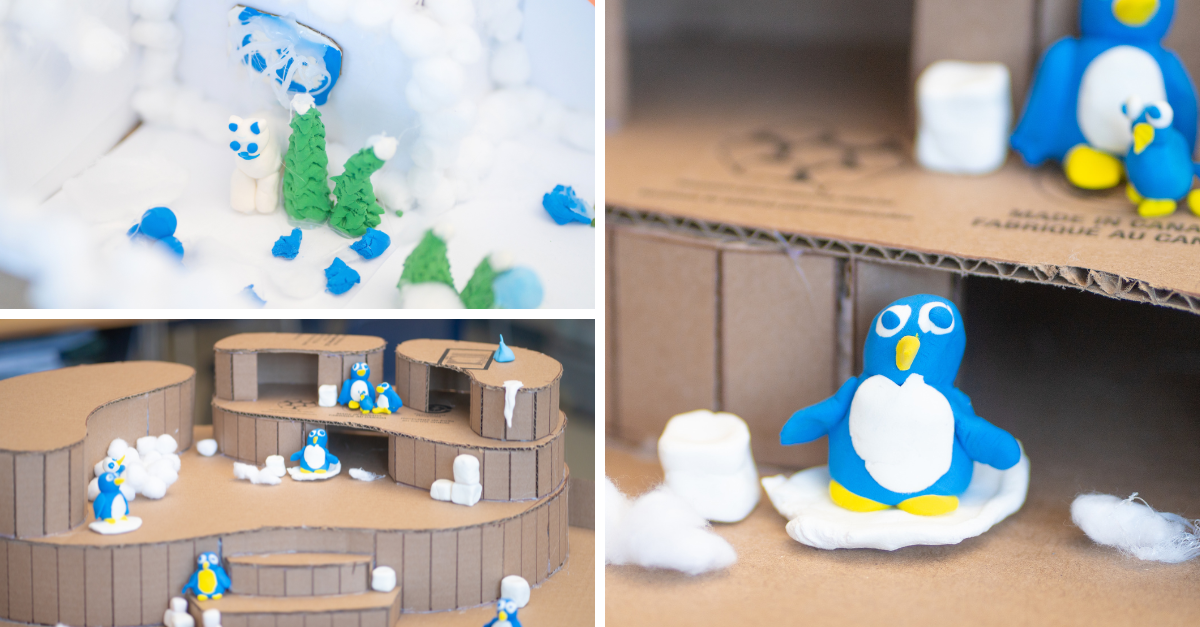
Try it at home:
Use a shoebox or cardboard tray. Choose one habitat, like the Arctic, ocean, farm, forest, or zoo. Add animals, water, snow, plants, rocks, or shelters.
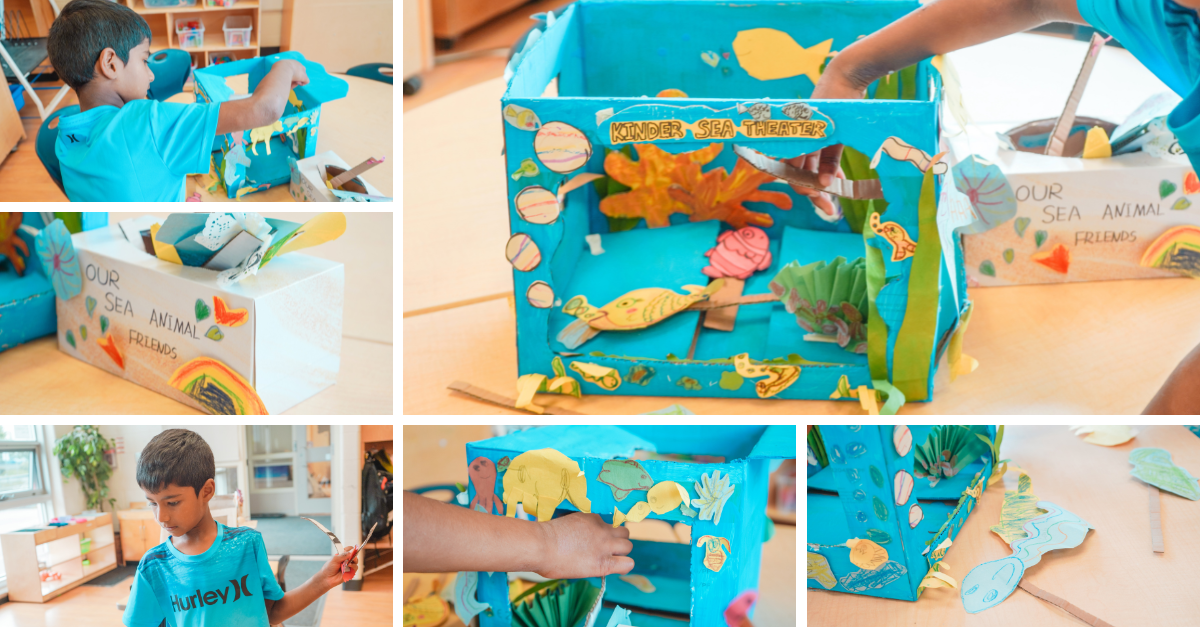
Children practise:
Observation, early science skills, design, storytelling, and care for living things.
Make it easier:
Ask your child what this animal needs to eat, sleep, and stay safe. Cotton balls make good snow. Blue paper makes good water. No real penguins needed.
5. Snowball toss game
In Etobicoke, educators noticed children liked throwing paper balls. They turned that interest into a safe cardboard snowball toss game with targets, points, decorations, and child-made rules.
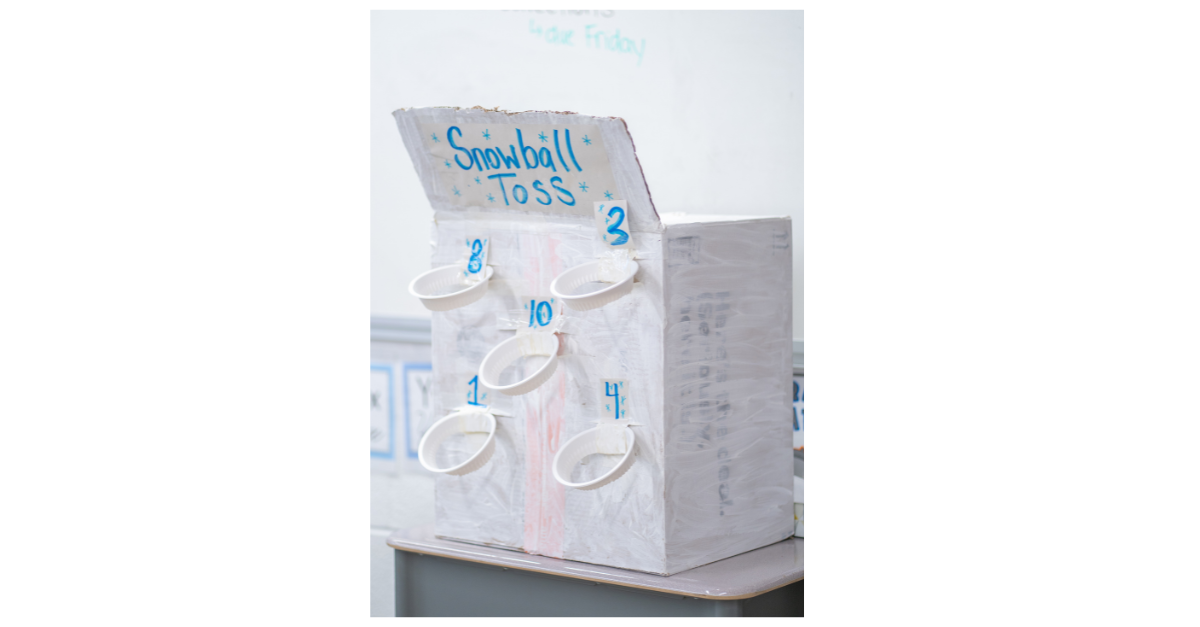
Try it at home:
Cut holes in cardboard, tape cups to a box, or draw targets. Use rolled socks, soft balls, or paper “snowballs.”
Children practise:
Hand-eye coordination, focus, turn-taking, patience, self-regulation, and early math.
Make it easier:
Draw three targets and let your child choose the points. This gives children a safer place to throw, far away from lamps and snack bowls.
6. Mailbox or cardboard car
In Scarborough, one cardboard car project began after children talked about going through a drive-thru with their families. Another project started with Valentine’s Day cards and grew into a handmade mailbox.
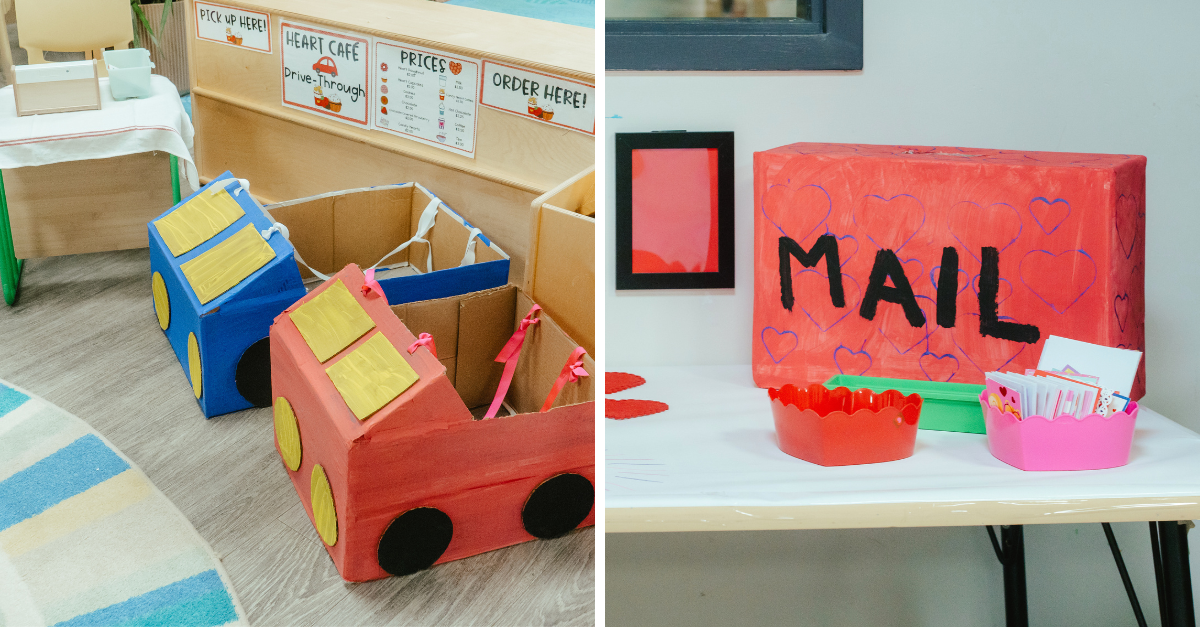
Try it at home:
Make one simple prop, like a mailbox for family notes, a cardboard car, a camera, or a telescope.
Children practise:
Early writing, fine motor skills, communication, storytelling, confidence, and imagination.
Make it easier:
Start with a mailbox. Invite your child to write or draw one note for someone at home. It can be a picture, a scribble, or a very important note that says, “I want crackers.”
Keep it simple and let your child lead
Remember to keep things simple. Your child does not need a perfect project. They need space to try.
Ask:
- What should we build first?
- What could we use?
- How can we make it stronger?
- What should we try if it falls apart?
- What could we add tomorrow?
A Stouffville educator shared that no idea is too silly. Their advice is to give children space to plan, create, experiment with materials, and take the lead, even when their ideas look different from what an adult first imagined.
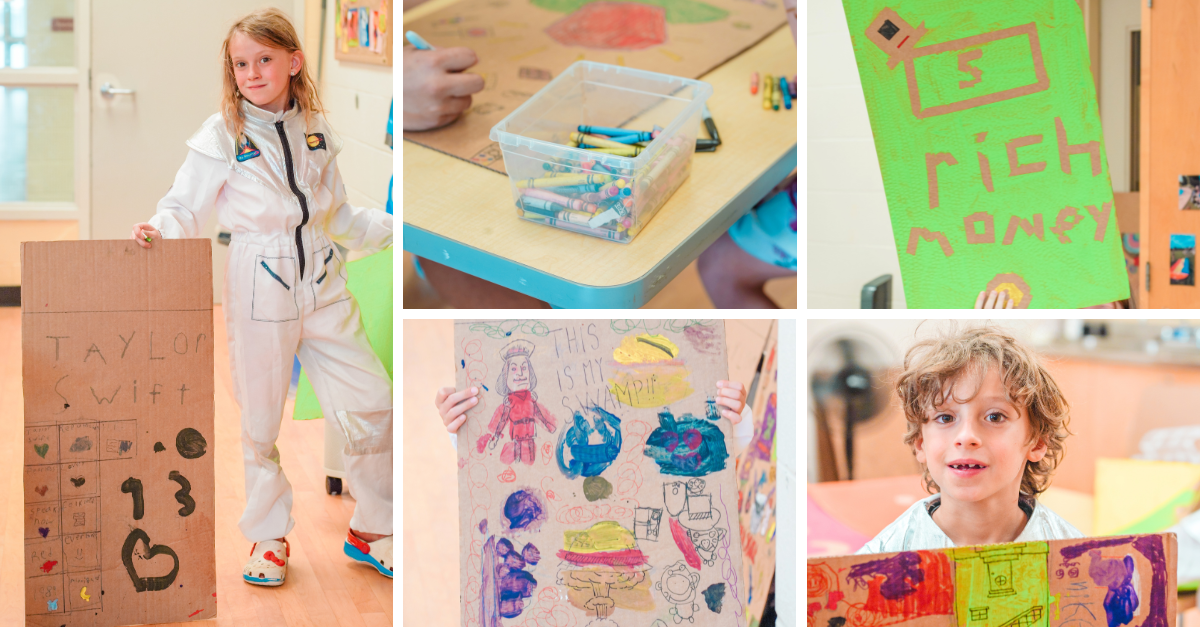
Educators from Etobicoke also said it’s best to let your child take the creative lead when it comes to designing and decorating the project. When children help make choices, they often feel more engaged and proud.
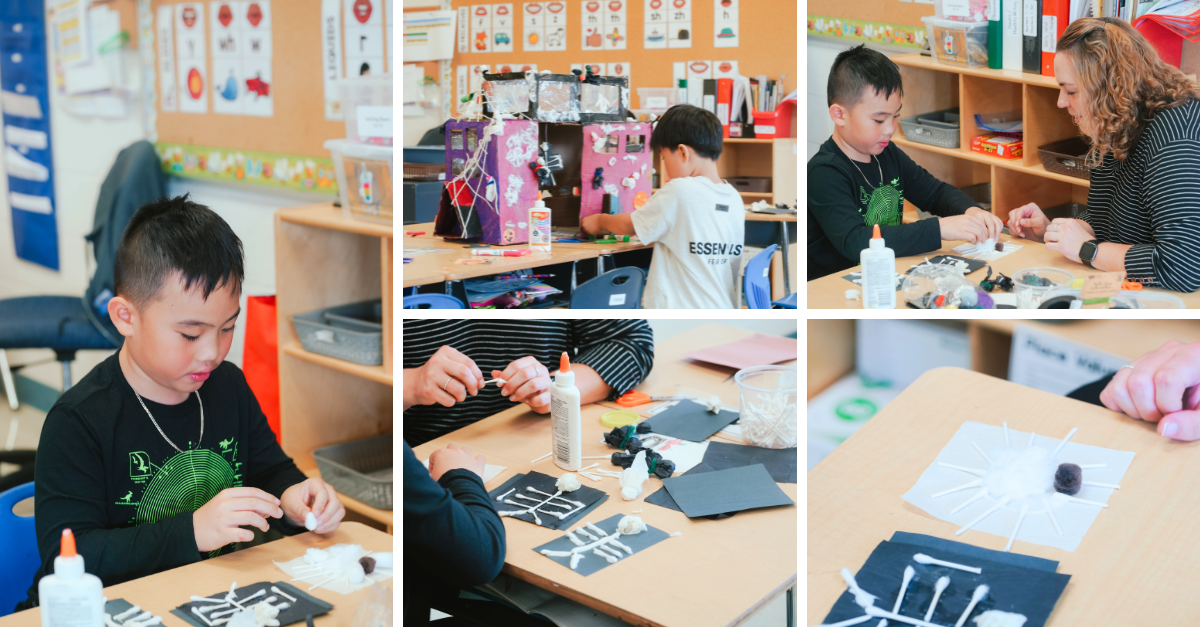
And one last tip from the Stouffville team: never throw out a cardboard box. You never know what creation is waiting inside it.
How cardboard play connects children at the Y
Cardboard projects for children give them a reason to work together.
One child may draw a sign. Another may build a counter. Someone else may make rules, animals, tickets, or pretend money. As the project grows, children listen, share ideas, solve problems, and choose roles.
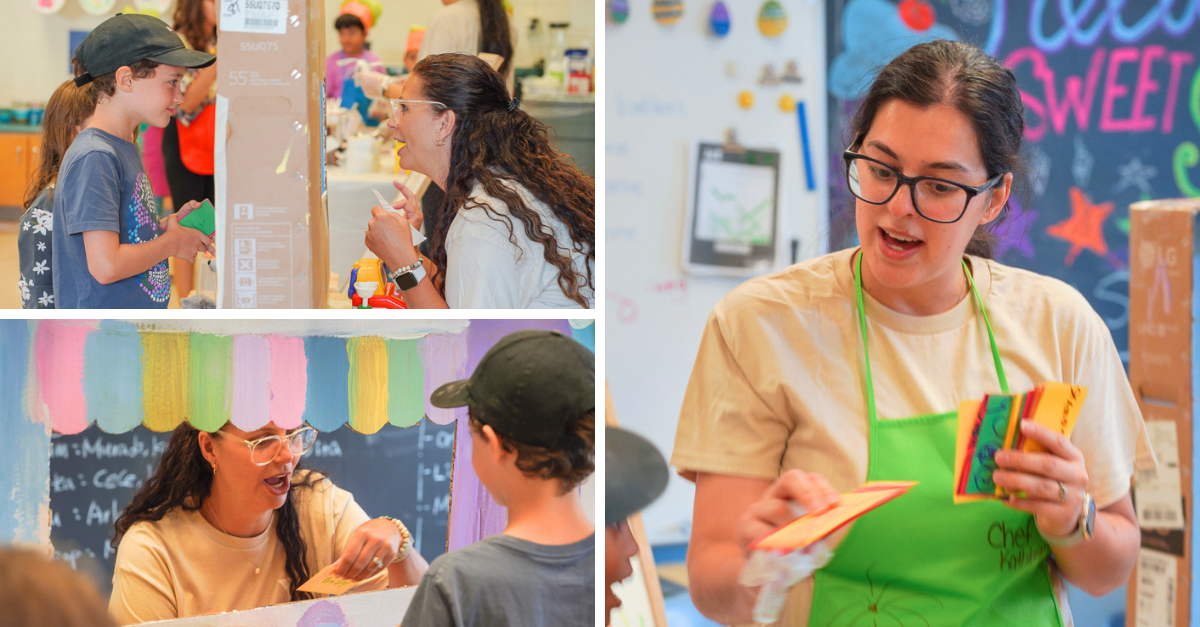
Educators shared that one of the most memorable parts is watching children show their families the project as it grows. That sense of pride is part of the learning, too.
This approach aligns with the YMCA’s A Place to Connect curriculum. In YMCA Before & After School programs, educators notice children’s interests and help them build on those ideas. A simple box can become a shared project where children feel heard, included, and proud of their ideas.
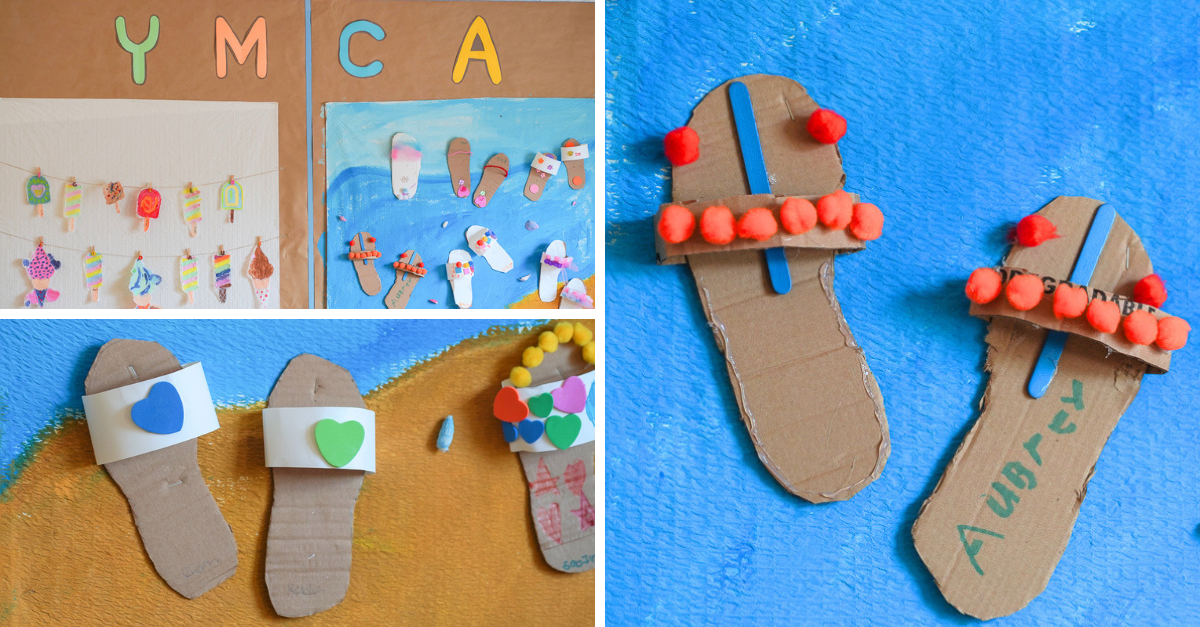
That matters to us as a charity. We believe children thrive in places where they feel welcome, respected, and connected. Through simple play, children can practise kindness, build confidence, care for one another, and see that their ideas matter.
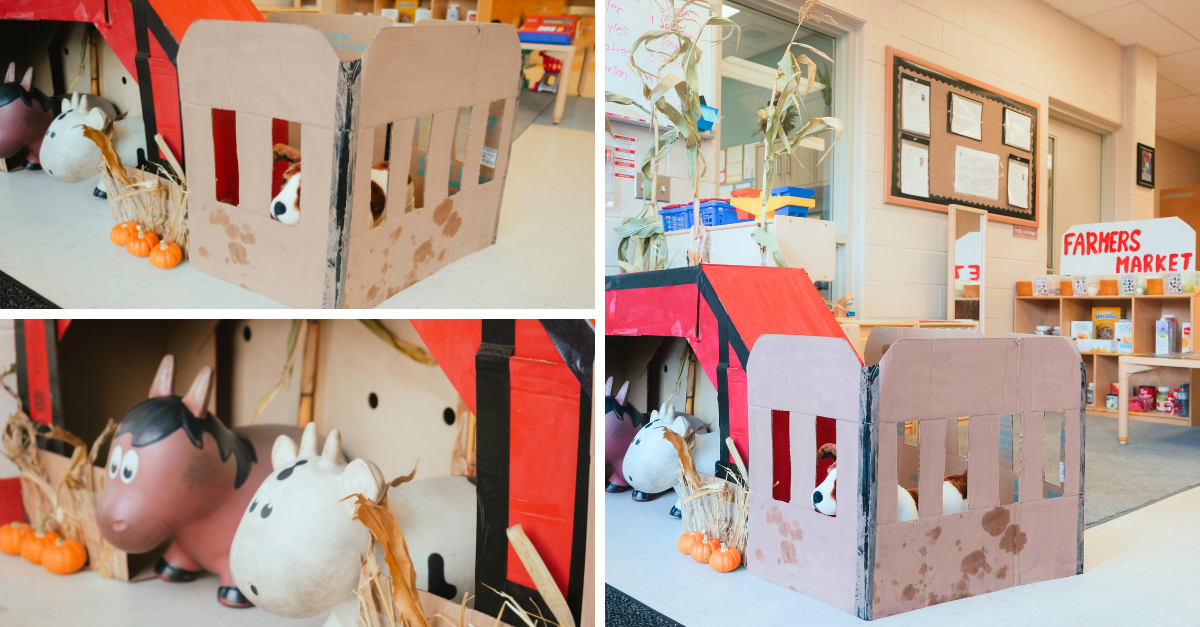
For you, that means your child has a safe, welcoming place to learn through play before and after the school day. They can explore ideas, connect with friends, and build well-being through small, everyday moments.