
Do you have these 8 qualities of a great child care educator?

Reading time: 5 minutes
Maybe children have always gravitated toward you.
You listen to their stories. You celebrate their ideas. You know a cardboard box is rarely just a cardboard box.
If moments like these bring out your patience, curiosity, and creativity, you may already have what it takes to be a great child care educator.
Working in child care takes training, teamwork, experience, and sound judgment. Here are eight qualities that can make a difference for children and help educators thrive.
1. Empathy
Empathy allows educators to look beyond a behaviour and consider what a child may be feeling.
A child who seems angry may feel tired, worried, or overwhelmed. A hard goodbye or a disagreement with a friend can feel like the biggest problem in their world.
Rather than respond to the behaviour alone, a great educator pauses and considers what the child may need.
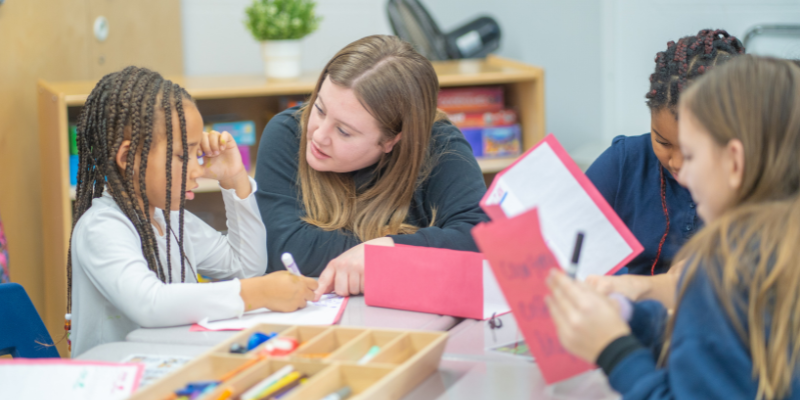
For educators, empathy builds trust and guides thoughtful responses during challenging moments.
Muneeza, a YMCA Registered Early Childhood Educator, sees this in her work with infants. By responding to each child’s cues and pace, she creates a sense of security as children learn and grow.
Empathy builds relationships. Strong relationships give children a foundation to thrive.
Learn more about how families and educators can support children as they cope with stress.
2. Encouragement
Encouragement means knowing how to guide a child without doing something for them.
A child may be learning to zip a jacket, pour milk, or speak in front of their peers.
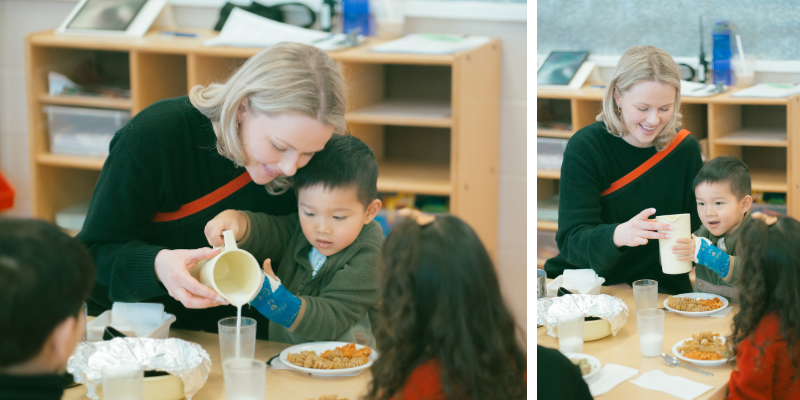
It may be faster for an adult to take over. However, a few encouraging words can give the child confidence to keep going.
"Tip the jug slowly."
"You almost have it."
Educators offer guidance while giving children room to practise, solve problems, and discover what they can do.
For educators, encouragement means focusing on effort while making space for children’s growing independence.
These moments may seem small, but they can build confidence that lasts well beyond the child care room.
Read how YMCA educators make a lasting impact through everyday moments.
3. Patience
Patience gives educators time to notice, understand, and respond.
Some children need more time to join a group. Others need space before they feel ready to talk or try something new.
A patient educator does not rush to fill every silence, solve every problem, or move a child to the next step.
Instead, they observe. Is the child unsure? Do they need encouragement? Are they working something out on their own?
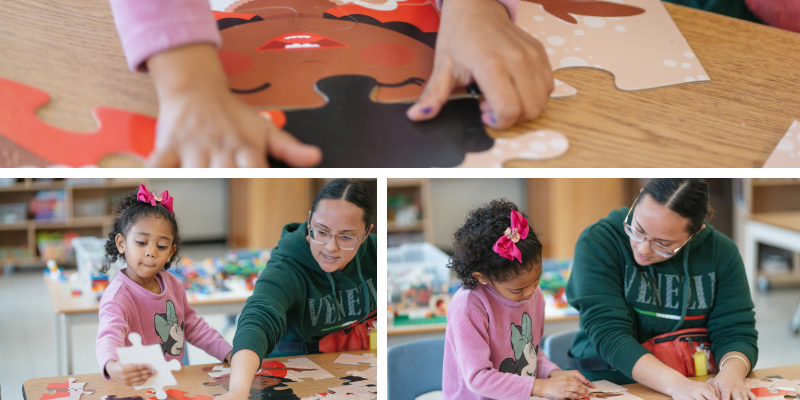
For educators, patience creates space to notice small cues and make thoughtful choices about what to do next.
Muneeza’s work with infants shows how much skill goes into these quiet moments. She watches closely and responds to each child’s needs rather than rushing to the next step.
Sometimes patience sounds like, "Take your time. I am here."
See responsive, play-based care in action in Muneeza’s infant room.
4. Curiosity
Curious educators keep asking questions about what they see, hear, and notice.
Why are the children returning to the same game every day? What interests them about it? What are they trying to figure out? Where could that interest take them next?
A great educator does not need to have all the answers. Curiosity encourages them to observe closely, ask questions, and look for possibilities in everyday moments.
Tatiana, a YMCA child care educator, does exactly that. When she noticed children were interested in the fall season, she dug deeper. What was it that caught their attention? Their answers pointed to "spookiness."
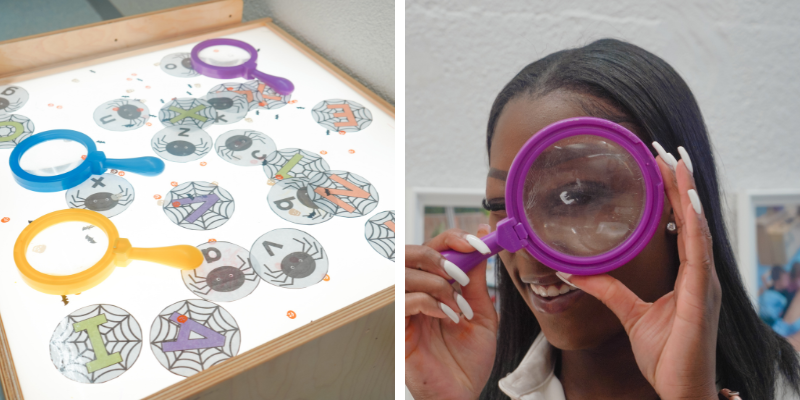
That discovery gave Tatiana an idea to build on. She developed playful experiences involving letters, light, shapes, stories, and dramatic play, all connected to an interest she uncovered by being curious herself.
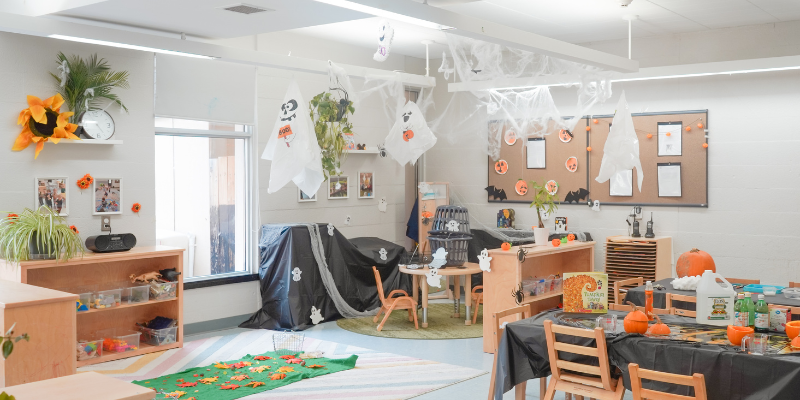
This is also where curriculum comes in. Through YMCA Playing to Learn™ and A Place to Connect™, educators learn to observe children’s interests and use what they notice to plan meaningful experiences.
For educators, curiosity keeps them learning alongside the children and turns observations into possibilities for deeper learning.
See how Tatiana plans playful learning experiences.
5. Creativity
Creativity allows educators to turn almost any interest, idea, or material into an opportunity to learn.
Children might suddenly become fascinated by bugs, shopping, or sports. A creative educator sees more than a passing interest. They see where it could lead.
A conversation about bugs might grow into art, outdoor exploration, counting, storytelling, and research. An interest in shopping can lead to a pretend store, counting activities, writing, co-operation, and dramatic play. One idea can inspire days or even weeks of experiences connected to the curriculum.
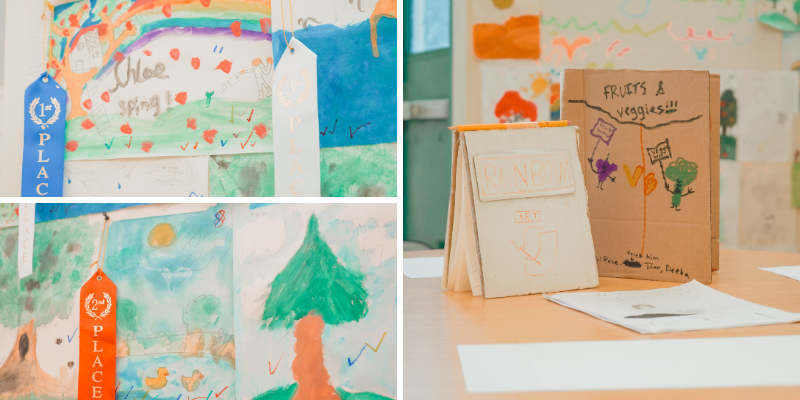
And educators don’t always need a room full of supplies to make it happen. A cardboard box, a ball, a few loose parts, or even an empty space can become the starting point for something completely new.
Jenny, a YMCA Before & After School educator, brings this creativity to her work by listening to children’s ideas and finding ways to build on them. Children in her program have created a bubble tea café, written a play, learned to crochet, and built a cardboard train..
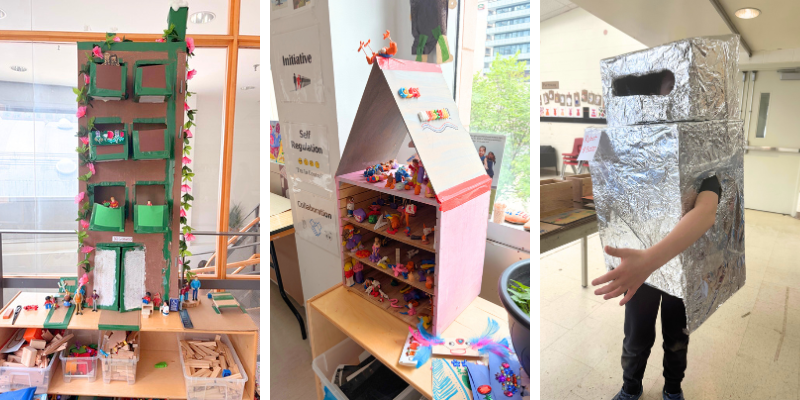
Her creativity is not about deciding exactly what children will make. It’s about seeing the potential in their ideas, finding ways to extend them, and creating opportunities for everyone to take part.
Creativity also matters when things do not go as planned. Educators use creative problem-solving throughout the day to rethink activities, work with the materials available, and find new ways to engage a group.
For educators, creativity means seeing a world of possibilities when someone else sees an empty box.
Children may bring the plot twist. A creative educator knows what to do with it.
Explore more cardboard projects for children, or meet Jenny.
6. Playfulness
Playfulness allows educators to connect with children in their world.
An educator might become a customer at a pretend restaurant, pass a soccer ball, bring a puppet to life, or accept a very important imaginary cup of tea.
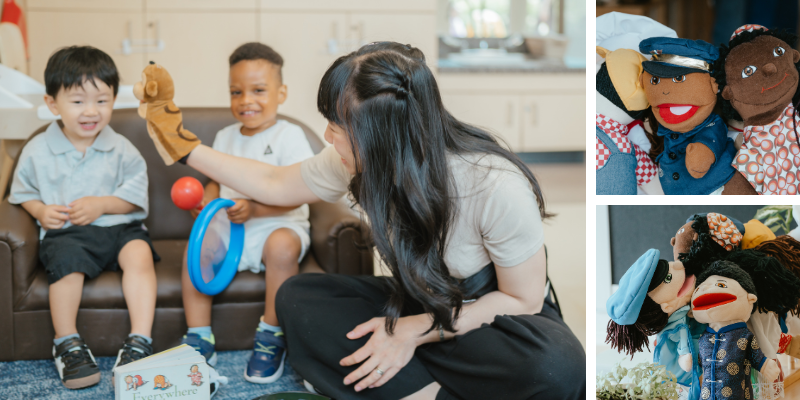
Joining children’s play gives educators a natural way to build relationships, learn what matters to children, and introduce new ideas. They can model fair play, encourage communication, and guide children as they work through conflict.
But being playful does not mean an educator needs to lead every game.
Sometimes the most playful thing an educator can do is follow the child’s lead. They might take on the role a child assigns them, add a question that moves the story forward, or simply watch long enough to understand the rules of a game the children have invented.
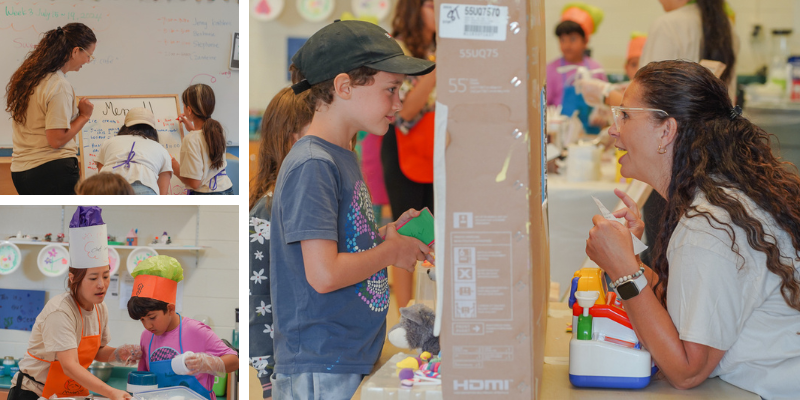
A skilled educator knows when joining the action can enrich the play and when giving children space will allow their ideas to take the lead.
For educators, playfulness creates a natural way to build trust, understand children’s interests, and explore real-life situations together.
Sometimes the best conversations happen while sitting on the floor.
Sometimes they happen while passing the ball.
7. Adaptability
Adaptability allows educators to respond confidently when the day doesn’t go according to plan.
An activity may not hold the group’s interest. One child may need quiet while another needs movement. The weather may mean changing course for outdoor play.
Before & After School educators also welcome children who arrive with different needs and energy levels after a full school day.
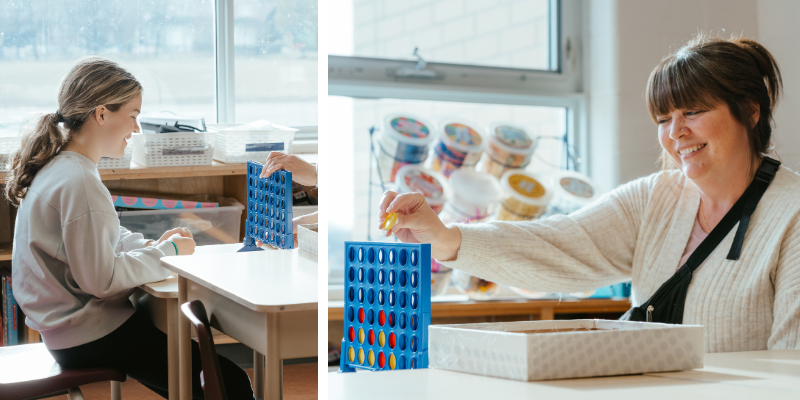
Educators observe what’s happening and choose the best next step rather than sticking to what they had in mind.
Being adaptable also takes some of the pressure off getting everything "right" and lets educators respond to the people and situations in front of them.
This can be especially important for educators who work on-call or fill in across different child care programs as supply staff. They may enter a new room, meet a different team, and learn unfamiliar routines, all while creating a welcoming experience for children.
Plan B is not always a failed Plan A.
Sometimes it is the better plan.
Learn what it’s like to start in an on-call child care role, or compare early learning and school-age programs.
8. Leadership
Leadership means taking responsibility, using your voice, and creating a positive example for others.
In child care, leadership is not limited to job titles.
An educator shows leadership when they speak up for a child’s needs, take initiative when something needs to be done, share an idea that could strengthen the program, or help a new colleague feel welcome.
They also lead through their everyday actions. Staying calm during a difficult moment, following through on a commitment, or being willing to listen to another perspective shows others what a strong educator looks like.
Leadership can also mean noticing opportunities for improvement. An educator might recognize that a transition is not working well for the group, bring the observation to their team, and offer ideas for a different approach.

As educators gain experience, mentorship and professional learning can give them opportunities to practise these skills, learn from others, and take on new responsibilities.
For educators, leadership means having the confidence to contribute, take initiative, and make a positive difference for the people and program around them.
Leadership does not always look like standing at the front of a room.
Sometimes it sounds like, "I noticed something," "I have an idea," or "I can take this on."
Learn how mentorship supports YMCA educators as they grow into leaders.
Could you see yourself in this role?
Perhaps you enjoy seeing children discover something new. Maybe you like turning ideas into activities, solving problems as they come up, or building meaningful relationships.
Part-time and supply staff roles offer a flexible way to gain experience. Before & After School educators work with children ages four to 12, creating opportunities to play, learn, and connect at the beginning and end of their school day.
Bring your care. Bring your ideas. And yes, bring shoes you can move in.